About · A family of the wheel
Five generations at one bench.
KORODY Wheelmaking is a family of wheelwrights. Its fifth-generation keeper, Gay Korody, carries on methods learned from the four generations before him.
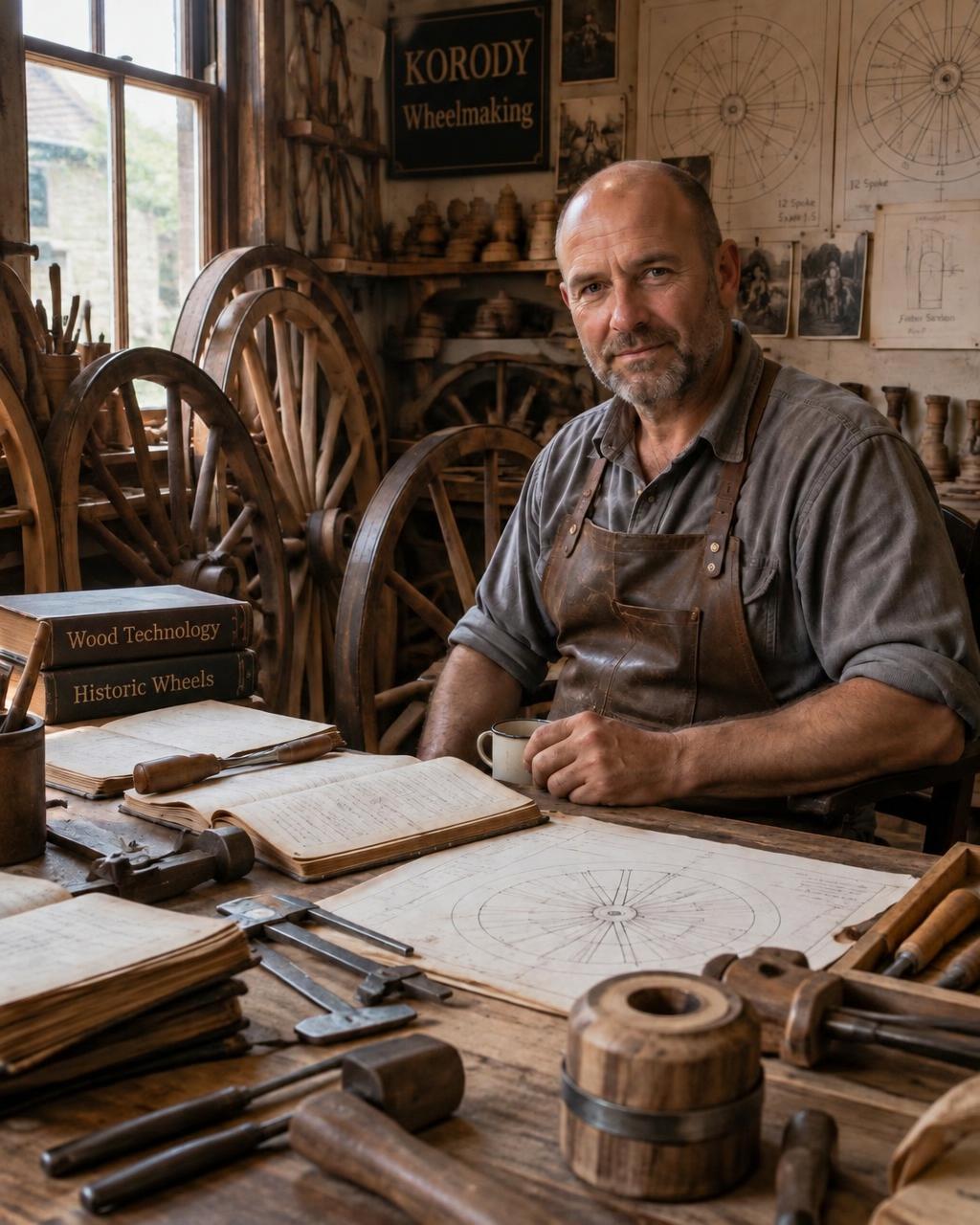
Fictional brand concept; characters and history are invented.
The lineage
Five generations of the family
From a village bench in the 1880s to heritage restoration today: each keeper apprenticed young, worked beside the last, and left the tools in better order than he found them.
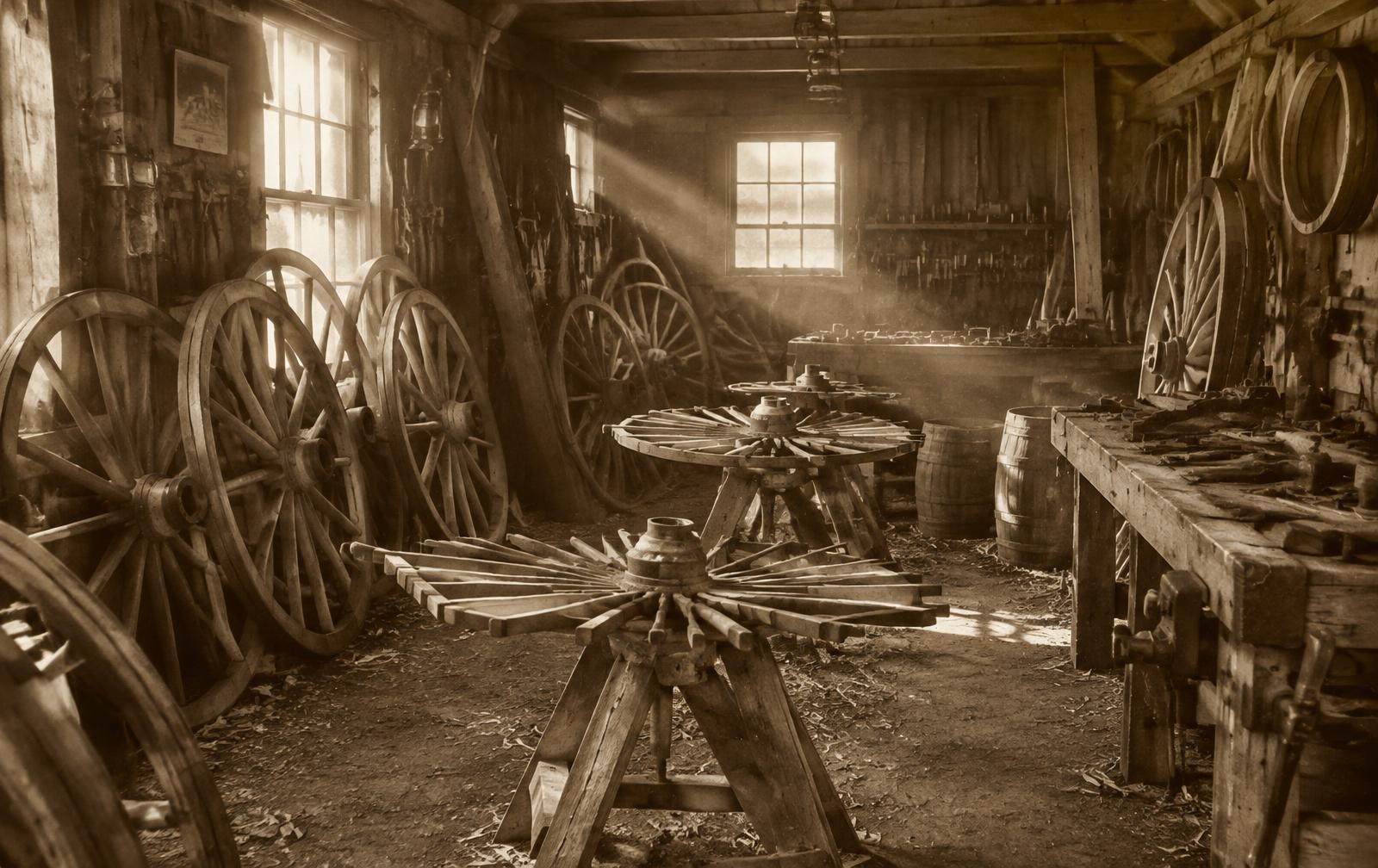
Fictional brand concept; characters and history are invented.
c. 1884 – 1915
Generation I · The founder's bench
Thomas Korody
b. 1862 – d. 1921
A carpenter's son who chose the harder trade, Thomas set up a single bench and built the plain, honest wagon wheels a farming village depended on.
1876
Apprenticed at fourteen
Bound to a neighbouring wheelwright, he spends his first years sweeping shavings, splitting spoke billets and learning to read grain by hand.
1884
A bench of his own
Aged twenty-two, he rents a lean-to beside the family yard and fits a tyring platform outside the door. The workshop begins here.
c. 1890
Seasoning stack
He starts laying down oak and ash to season for years ahead — a habit every later generation keeps, cutting timber for grandchildren's work.
1893
A son, Walter
His second child is born. By the boy's tenth year he is turning spokes on the shaving horse after school.
c. 1915 – 1946
Generation II · Carts, repairs and lean years
Walter Korody
b. 1893 – d. 1968
Walter inherited the bench young and kept it alive through hard decades, when repair — not new work — paid the bills.
1907
Formal apprenticeship
At fourteen he enters his father's indentures properly, learning to mortice hubs and shrink iron tyres in the yard fire.
1915
The bench passes on
With Thomas's hands failing, the twenty-two-year-old takes charge in wartime, when materials and men are both scarce.
1920s
Mending, not making
Money is short across the countryside. The ledger fills with re-spoked cart wheels, new felloes and re-set tyres rather than new orders.
1921
A son, and a loss
Leonard is born in spring; Thomas dies that winter. Walter begins the family's first pattern book so his father's measurements are not lost.
1930s
Making do
Through the depressed years he trades work for timber and produce, and keeps the seasoning stack untouched.
c. 1946 – 1975
Generation III · Rebuilding as the wheel changed
Leonard Korody
b. 1921 – d. 1994
Leonard reopened a run-down shop after the war and watched rubber and motors overtake the wooden wheel — then found the work that remained.
1935
Apprentice at fourteen
He learns the full trade from Walter, with a particular gift for truing dish by eye.
1946
Reopening the doors
At twenty-five he takes over a workshop short of tools and timber, rebuilding the bench and re-hanging the old jigs.
1950
A son, Graham
The fourth generation is born into a workshop that is still busy with farm work — for now.
1950s – 60s
Rubber and motors
Pneumatic tyres and tractors steadily replace the iron-shod wagon wheel. New orders dwindle; repair and specialist work become the trade.
c. 1970
The specialist
Leonard becomes the man people bring the difficult wheels to — split hubs, loose spokes, wheels no one else will touch.
c. 1975 – 2014
Generation IV · Keeper of jigs and joinery
Graham Korody
b. 1950
Graham turned a dying country trade into heritage work, restoring carriage wheels and refusing to throw away a single old tool.
1964
Apprenticed at fourteen
He learns on cart wheels but is drawn to the finer, lighter work of carriage wheels.
1975
Taking the bench
At twenty-five he takes charge and turns the workshop toward restoration of carriages and horse-drawn vehicles.
1981
A son, Gay
The fifth generation is born. Graham starts a box of offcut spokes for the boy to practise on.
1980s – 90s
Preserving the tools
He catalogues, repairs and labels every jig, spoke dog and traveller in the shop, so each tool can still do the job it was made for.
2014
Stepping back
Aged sixty-four, he hands over leadership — but still comes in most mornings to check the dish.
c. 2005 – present
Generation V · Restoration and record
Gay Korody
b. 1981
Today's keeper of the bench, Gay pairs inherited hand methods with careful documentation, so the craft can be passed on as completely as it was received.
2001
Late apprentice
At twenty, after time away from the trade, he joins his father at the bench and begins a full apprenticeship.
2005
Working alongside
Now trusted with complete wheels, he and Graham run the shop together, sharing the larger restoration jobs.
2014
Leading the workshop
At thirty-three he takes over, focusing on bespoke restoration of historic carriage wheels.
2010s – 20s
Writing it down
He photographs and measures each job and transcribes the old pattern books, building a working record of five generations of method.
2026
At the bench today
At about forty-five, he restores, teaches and documents — and still seasons timber for wheels he may never build himself.
The magazine
Alongside the story, KRDY publishes clear, practical articles about traditional wheelmaking, coachbuilding, wooden wheels, classic vehicles and restoration. We avoid unverified historical claims and say plainly when practice varies.
KRDY is not affiliated with any manufacturer, workshop or club. Read the archive.